
Methodology and Skills,Board for Certification of Genealogists,BCG,Reisinger Memorial Lecture Series
Context: A Powerful Tool for Problem Solving (a 2021 Reisinger Lecture)
Elizabeth Shown Mills, CG, CGL

Content

Welcome
2m 11s
Speaker's Introduction
1m 4s
Introduction
11m 32s
Internal Context
17m 33s
External Context
23m 28s
Conclusion
1m 34s
Questions / answers
6m 50s
About this webinar
Raw facts do not tell a story. They may not even tell the truth about what they do relate. As researchers, we seek original documents that offer us "the facts." But facts are impish devils, and historical records do not speak for themselves. They cannot explain themselves. They are inert objects created by individuals of a different time, a different culture, and who-knows-what mindset. If taken at face value, records and their "facts" can deceive, mislead, or confuse us. The only voice that documents have is the voice we give them. With every document we find, and every story we tell, we have a choice:
\n
-
\n \t
- We can take what we see at face value, report it devoid of context, and run the risk of misrepresenting the circumstances. Or ... \n \t
- We can seek the context we need to understand the record, the event, and the person. \n
About the speaker

Across a long career, Elizabeth Shown Mills, CG, CGL, FASG, FUGA, FNGS, has been an innovator of research methods and strategies. Published widely by academic and popular presses, she edited a nationa...
Learn more...Related webinars
 01:29:55
 01:20:53
 01:14:55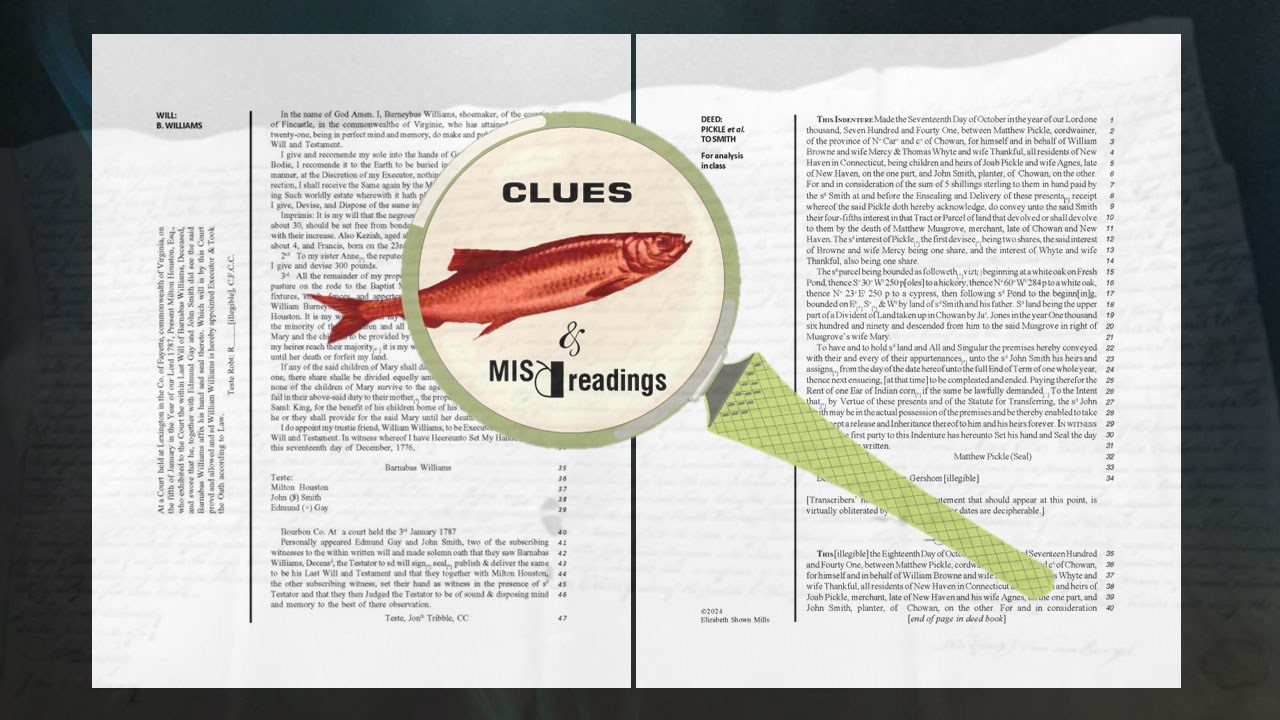
 01:14:47
Comments (404)
Very helpful. Thank you so much.
Impressive webinar from a real-deal genealogist! Thank you for sharing your method and insights ESM!
I learned so much from this.
So sad to be losing such a genealogy icon, but thank you Elizabeth for all you have done to educate fledgling genealogists. You will be missed. Enjoy yourwell-earned retirement!
Just brilliant! Thank you! \nI'd love to see lectures like this where British or Irish records are being used as examples too - whilst this is obviously methodology that can be applied anywhere, it would still be good to get clues as to what else might provide context across the pond.
As always Elizabeth is amazing. I've been her student in institutes, conference and webinars for more than 30 years. She raised me genealogically!
Thank you, Elizabeth, for your countless contributions to the field of genealogy. Your teachings and legacy will continue to inspire all of us. Wishing you all the best in the years to come!
Wonderful reminder of what good genealogists must do. I loved your lecture in using DNA to figure out the structure and relationships of families in (I think) Alabama and Georgia.