

Content

About this webinar
About the speaker

Key points and insights
Understanding the handwriting of the past is a vital skill for genealogists, and this Webtember session led by professional genealogist Amie Bowser Tennant delivers a clear and captivating overview of the world’s five major writing systems. Titled The Five Writing Scripts of the World for Genealogists, the webinar highlights how knowledge of paleography—the study of historical handwriting—empowers researchers to decipher centuries-old records and inscriptions. Amie explains not only the differences between writing systems but also their historical development, practical applications in genealogy, and how genealogists can strengthen their skills through practice and resources.
Key Takeaways
-
Five Global Writing Systems: All writing falls into five categories—alphabets, abjads, abugidas, syllabic, and logographic. Amie illustrates each with examples from Hebrew tombstones, Filipino Baybayin script, Cherokee syllabary, and Egyptian hieroglyphs, showing how diverse systems still inform genealogical research today.
-
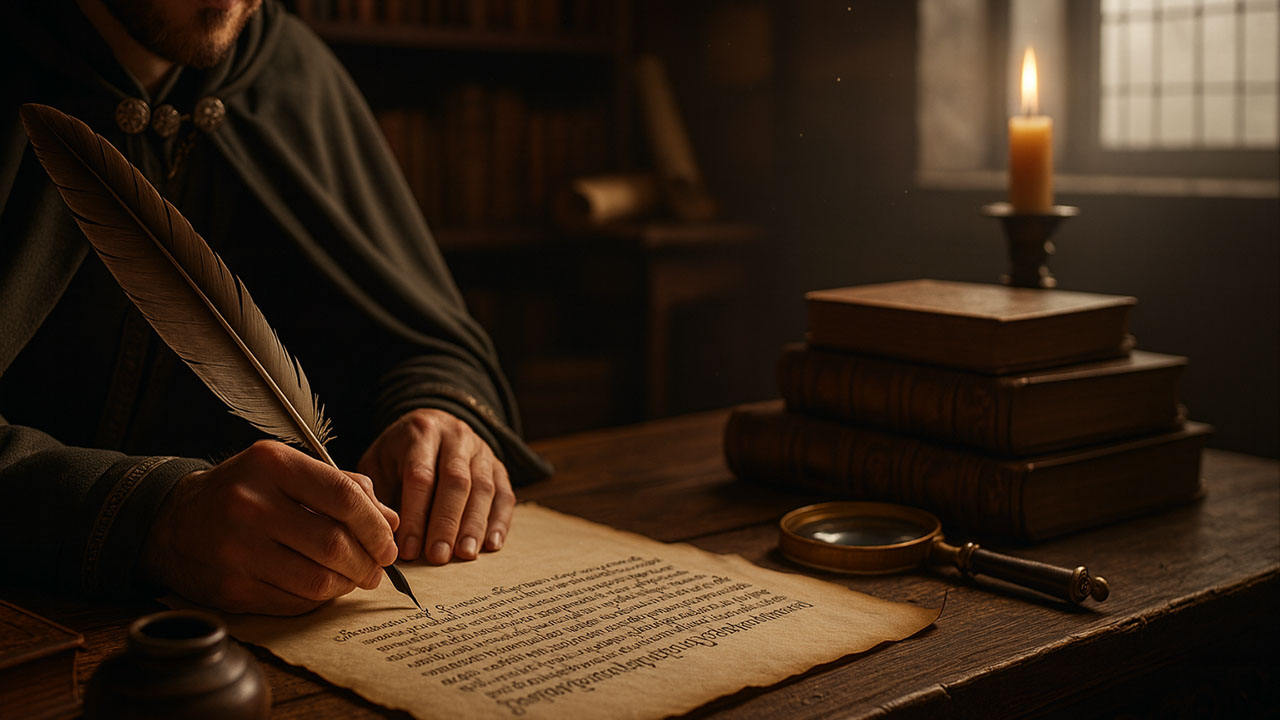
Evolution of English Scripts: The session traces English handwriting from medieval Textura and Court Hand to Secretary, Italic, Round Hand, Spencerian, and the Palmer Method. Along the way, Amie explains unique letterforms, lost characters, and abbreviations that often puzzle researchers. Understanding these changes helps genealogists accurately transcribe wills, deeds, and parish records from different eras.
-
Practical Learning and Application: Amie emphasizes that practicing handwriting styles improves transcription skills. She shares online interactive paleography resources, discusses the influence of writing instruments on style, and encourages genealogists to join language-specific study groups or communities, such as German script circles, to gain confidence and accuracy.
This webinar underscores that paleography is not just an academic exercise—it is an essential tool for unlocking the voices of the past. Whether working with Latin parish records, colonial American deeds, or family letters in foreign scripts, genealogists gain clarity and confidence by learning to recognize these writing systems.
To dive deeper into these topics, watching the full webinar will provide practical demonstrations, additional examples, and direct access to resources that can sharpen your transcription skills. The included syllabus offers curated guides, practice tools, and references to help genealogists build confidence in reading historical scripts. Exploring these materials will equip you to face the most challenging handwritten documents and bring your ancestors’ stories into sharper focus.
Related webinars
 01:16:40
 01:23:25

 00:56:18
 01:11:59
 01:24:18
 01:27:11
Comments (47)
An absolutely fascinating talk. I learned a lot and made some notes that will hopefully help me make better sense of an old document that I gave up on because it was so difficult.
so much new information for me.
I found this fascinating! I learned so much and could clearly recognize that there was progression through the years to turn from printing to cursive. I now have an overall understanding of languages and how to read them. Melody Knight
Very interesting!
Fantastic information. Will be very helpful with an old will I have partially written in Latin. Wish I could write this review in cursive handwriting!
Very interesting subject.
Excellent information and very helpful
Very interesting!