
What’s the Evidence? How to Probe Documents Beyond the Obvious
Elizabeth Shown Mills, CG, CGL

Content

Welcome
2m 0s
Class Overview
1m 27s
Introduction
9m 14s
John Watts
15m 37s
Captain Walton
4m 58s
Back to John
1m 58s
Strategies
14m 36s
What's the Evidence?
13m 45s
Announcements / prizes
2m 33s
Questions / answers
11m 44s
About this webinar
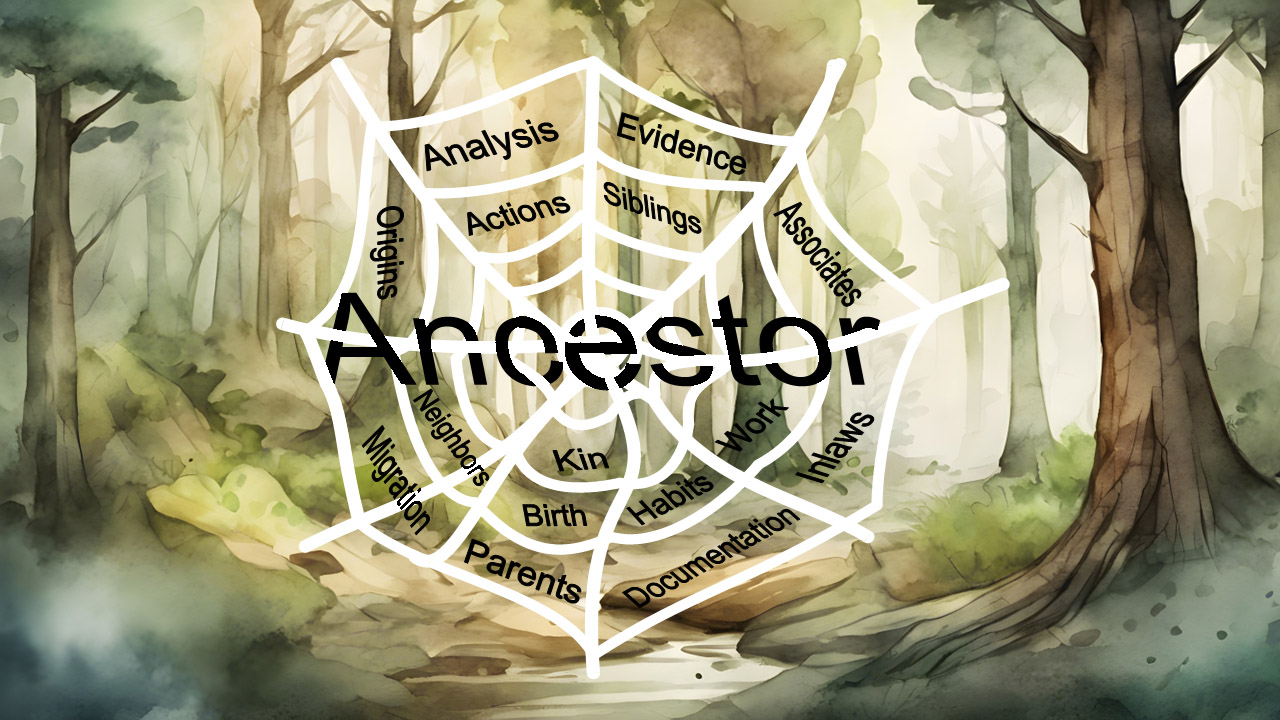
Whatever our research dilemma, a correct solution depends upon a reliable evaluation of the evidence we are using. Evidence is not concrete. It is not definitive. It is not a source. It is not a fact. It is not “proof.” It is, instead, our interpretation of what a piece of information means. Evidence is both singular and collective. We analyze it piece by piece. We correlate each piece with everything else discoverable, and then we analyze the whole to reach conclusions that are reliable. This session walks us through the three levels at which each piece of information should be evaluated, in order to draw a reliable conclusion from it. The principles are then illustrated with a common but thorny problem: a Revolutionary War–era case study that might be called: How to Identify Someone Who’s Been Mangled by ‘Facts.’
\n
\n*** This class requires an active webinar membership to attend. ***
About the speaker

Across a long career, Elizabeth Shown Mills, CG, CGL, FASG, FUGA, FNGS, has been an innovator of research methods and strategies. Published widely by academic and popular presses, she edited a nationa...
Learn more...Related webinars
 01:29:55
 01:20:53
 01:14:55
 01:14:47
Comments (112)
Fantastic step by step breakdown of the thinking and analysis by a pro. \nI would love to know: How many hours went into this for each step (or just the total). I'm doing a similar project for a 94 year old, gratis, and am at 25+ hours, far beyond what I had estimated. This reasonably exhaustive investigation is much aided by new AI tools at Familysearch etc, but its still terriby time consuming and depends on the quality, sharpness and willingness of the researcher to persevere.
Thank You. Now I realize just how much I don't know.
Thank you for sharing your knowledge, it was great
You have given me such inspiration to return to my research and learn more about my forebears. Thank you, Elizabeth! You are such a marvelous model of excellence.
Very informative!
ESM gave very good examples for eliminating false leads.
ESM is an amazing teacher. Throughly enjoy her webinars.
As usual, I have learned so many strategies for sifting through sources and analyzing them. These ESM webinar Fridays are a highlight of my month which I look forward to so very much!